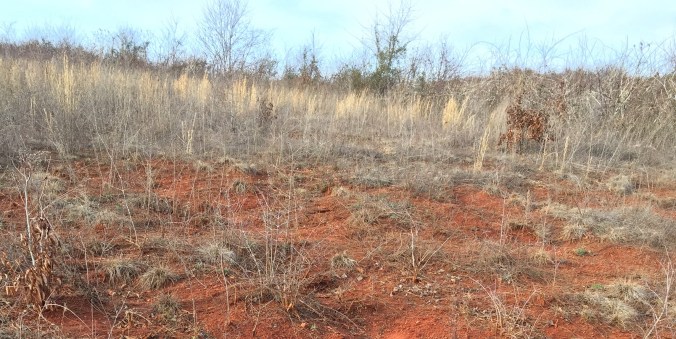
Soil is basic to our existence. Productive soils provide a foundation on which all other human enterprises can be built. In societies where soils are unproductive and resources are limited, most of the effort of the population is directed toward subsistence farming. If agricultural productivity can be increased, somebody can sell something. Then somebody has money to buy something. Somebody has the time to make something to sell. A society’s productivity is dependent on the productivity of its farms. There are some exceptions among wealthier nations now, but they didn’t start out that way. Most of the poorer nations of the world are trying to feed themselves from soils that have been abused for hundreds, even thousands, of years. Any real progress in agricultural production must begin with healing the land.
All of this may seem remote to us here in America, but it is worth our time to look at where we have been and where we are today with respect to soil. When Europeans first came to America , the native population was so sparse that it had virtually no impact on the soil. The white settlers were presented with soils that had been building for many hundreds of years, even thousands. Much of the land they farmed was forested. They cut down trees,grubbed out the stumps that they could break loose, and farmed around the stumps that wouldn’t budge.
The available acreage was limitless! When land became less productive they simply moved on. ( We are critical of slash and burn agriculture in the Third World. Was this any different?) Settlers continued west. The forested lands west of the mountains were settled next, then the prairies, then the Great Plains, then on to the west coast. Not all of this pattern was due to depleted soils. The population was expanding also.
A couple years ago our family spent a week in Eastern Va. One day we decided to visit Yorktown, the site of the final battle of the Revolutionary war. A guide gave us a brief history of the city. Yorktown is situated near the mouth of the York river. It is an ideal natural harbor. The water is deep right up to the riverbanks. Docks were easily built. Tobacco was introduced shortly after Jamestown was settled, and very soon dominated colonial agriculture. When Cornwallis hunkered down in Yorktown, Washington”s army bombarded the town until the British army surrendered. Half of the buildings in the city were destroyed by the shelling. Here is the punchline. The city was not rebuilt! By the late 1700’s all the soils within a large radius of the city had been depleted to the point where it was no longer practical to market tobacco in Yorktown. Freshly cleared virgin soil in Eastern Virginia could yield 3 consecutive crops until it had to lie fallow. After that, subsequent crops yielded less and the land was abandoned. Tobacco culture had moved further inland. Then the land mercifully had its sabbaths. Now the area has a mixture of productive farmland and tall timber. Two hundred fifty years of healing seems to have erased one hundred fifty years of abuse. Those fragile soils probably are still a long way from what they were in 1600.
I was visiting with a retired dairy farmer from Powhatan County several years ago. He had bought his farm there around 1960. Powhatan is just west of Richmond. Soon after he bought the farm, he contacted a soil conservationist to help him plan his cropping program. The soils man said,”Your topsoil is gone. Your subsoil is gone. You’re trying to farm the third layer.” I’m sure there were some struggles early on, but good stewardship of the soil helped that farmer to be successful. When I travel through Powhatan county today, I see good timber and productive farmland, but it has not always been so.
On our own farm I have seen the scars of earlier abuse. We have cleared over a hundred acres since I began my farming career. We knew that we weren’t here first. There were old tobacco rows between the trees. There were gullies healing up in the woods. A typical soil test on our “new ground” was ph 5.0 or less, phosphorus very low, and potassium very low. Crop yields were low. It took several years of manure, lime, and fertilizer to improve the soil to the point where yields were adequate. How much better would it have been if good soil stewardship had been practiced all along.
All of this is 20-20 hindsight of course. We can’t recover the soil or the fertility that has been lost. We can’t really blame past generations. They were acting in good faith with the knowledge and resources available to them. We have the tools and knowledge today to build soil and enjoy good yields in the process. It is interesting to note that a farmer less than an hour west of Yorktown (on the James River) set a new world record in corn production last year (2017) . The new record is 542 bushels per acre. He is a proponent of “never-till”. His crops are all established by no-till planting. Crop residue is left on the surface rather than being plowed down or disked in. The soil is protected from erosion and soil fertility, organic matter content, and water infiltration, are all improved.
Now, how does this relate to agricultural development in missions? Having experienced soil healing in the US, we have some perspective as to what is possible in areas where soils have been similarly depleted. Farmers in developing countries haven’t had access to the information or the resources that are available here, but similar healing of the land is possible. Almost every developing nation has already had analysis,research,and extension education to help meet the needs of the small landholders. This sounds contradictory, but somehow the message has not rooted well. There are many cultural, economic, political, and spiritual barriers that have undermined progress in agricultural development.The goal of “holistic development” is to combine spiritual outreach with those everyday challenges that indigenous peoples face. Development workers who are spiritual leaders first, can establish trust with indigenous people, and can help them accept changes to boost their productivity and quality of life. I may have aroused some interest, raised some questions, and left some things hanging— topics that will be discussed at a later time.
 Bright Canaan