BON VOYAGE

IMG_7225

We have a potted lemon tree on our deck, which spends its warmer months outside and the frosty months indoors. It is actually quite productive with very good fruit. Its blossoms are exquisitely fragrant. During the first week of October we noticed monarch butterflies on the flowers, extracting nectar. I noticed that the monarchs were a little larger and brighter than the ones I had seen earlier in the summer. It dawned on me, these are the migratory generation! They are probably headed to Mexico!

Monarch butterflies are common in many parts of the world, but only a few groups are migratory. There are three groups in the US, and all three are migratory. On the extreme east coast they have a range from Florida to eastern Virginia. West of the Rocky Mountains, they overwinter in southern California and migrate all the way north into southern Canada and back. The population east of the Rocky Mountains is the largest and most spectacular. The most extreme distance is from the wintering grounds in Mexico all the way to Canada north of the border of Maine. That is over 3000 miles (5000 k.). If that weren’t mind boggling enough, it is astounding to learn that the monarchs that return to Mexico are the great-grandchildren of the ones that begin the migration in the spring! It takes four generations to complete this cycle, and the overwintering generation finds the same few acres occupied by their great grandparents the year before. A monarch may not have contact with either its parents or its offspring—no learned behavior passed on. This is truly one of God’s creations meant to “confound the wise,” much too intricate to have happened randomly.

Before 1975, scientists were unaware of this awesome story. It was assumed that some eggs survived the winter and hatched out like other insects. The tribal Mexicans thought that the monarchs were spirits of the dead that came every fall and left every spring. The migration was discovered when scientists began tagging monarchs to track them. This led to the link between the overwintering Mexican population and the summer population in the US. Look up monarch migration on YouTube. There a number of videos with good pictures of monarchs huddled tightly on oyamel fir trees in the mountains of central Mexico.

The monarchs arrive in their wintering habitat early in November. They are in an attenuated state for the winter, leaving their huddled masses only occasionally for a drink of water on a warm day. They are “ coldblooded,” expending almost no energy for body functions. They don’t eat all winter, relying on lipids and sugar stored on the southern migration. This stored food also has to last for the first leg of the journey north around the beginning of March, when nectar producing plants begin to be available. The overwintering generation moves north as far as Texas and the southernmost tier of states until it finds milkweed in bloom. Monarchs lay their eggs on milkweed plants only! Then the first generation dies. The eggs hatch into the larva or caterpillar stage. At maturity, the caterpillar spins a beautiful chrysalis. The chrysalis opens a little later, transforming into an adult butterfly, which promptly heads further north looking for fresh blooming milkweed. The subsequent three summer generations of monarchs each have a complete life cycle of five to six weeks. The fall generation is a whole new ball game! In the northernmost range, monarchs “born” after mid-August become the long migrating generation. There are no more fresh milkweed. They enter diapause; they will not lay eggs until they complete the first leg of the spring migration. They will live for eight to nine months.

The long migration to Mexico is obviously fraught with many challenges. The monarchs “know” to head south. They “know” how to rely on wind currents to travel in the right direction, since they are not able to travel such a great distance by their own strength. It is interesting that the prevailing winds mostly don’t blow toward Mexico! As they travel, they feed on nectar from flowers, both to give them energy for the journey and to build body reserves to last through the winter and early spring. A severe drought over a wide area directly in the path of the migration could prevent them from building adequate energy stores for the winter. Interstate highways kill monarchs, since they are flying at low altitude in search of nectar sources. There are also parasites and predators that could increase mortality. In the wintering grounds, a rare freeze can lower the rate of survival. In 2016 a freak snowstorm killed many of the overwintering butterflies.

Wintering populations are estimated annually based on the land area occupied by the massed butterflies. There has been a long decline in the overwintering population from its peak in 1996 ( 380 million on 45 acres) until its low point in 2013 (14 million on about 2 acres ). They have rebounded somewhat since. There is concern among some scientists that something must be done to save the monarchs from extinction. Some theorize that herbicide use has led to a drastic decline in available milkweed. The summer populations appear to be resilient in rebuilding to normal summer population counts in the US despite the winter numbers. The fall nectar supply for the migration is being studied as is mortality from vehicle traffic. Some are advocating a large effort to plant more milkweed. There is one proposal to plant nectar producing flowers and milkweed along interstate highway corridors that match migration routes. Is that a good idea? One project involved planting a milkweed species in Texas that bloomed all summer. Returning monarchs were confused by these plants and some tried to stay instead of continuing the migration. They were also infested with a parasite hosted all summer by those milkweeds.

The milkweed is an interesting study in itself. By the way, I had never smelled a milkweed flower until about three years ago. I broke one off to show my granddaughter the milky latex from which comes its name, and we accidentally smelled the blossom. It was like a fine perfume! This obviously helps to attract pollinators including monarch butterflies. One would assume that the monarch butterfly and the milkweed have wonderful symbiotic relationship. The milkweed is actually not a very friendly host. It is toxic to most insects and even vertebrates. It is also somewhat toxic to monarchs, but there are some peculiar benefits as well. It has a bitter taste, therefore it is not disturbed by foraging animals. The milky latex can entrap insects that dare to chew its leaves, but the monarch caterpillar “knows” how to consume the leaves while minimizing exposure to the latex. The toxin level does, however, build up in the body of the caterpillar and carries over even to the adult butterfly. This makes the monarch toxic to predators in all three stages of its development although it does lose toxicity over time. Birds learn to associate the distinctive colors of each stage to a belly ache and leave them alone. Some birds do successfully feed on monarchs.

Many mysteries remain in the monarch story. When did they have their largest population? There is no mention of monarch butterflies in colonial writing. The northeastern US may have been too forested to have enough milkweed habitat to support migration into that region. It would seem that the maximum milkweed habitat in America could have been around 1900. At that time the amount of actively farmed land, abandoned farmland, and cut-over timber land could have been at a peak level. We only have monarch population estimates since 1975. How do the monarchs “know” what they are supposed do? How do they “know” which generation they are? What are the signals for migration? How do they navigate? Obviously that information is all a part of their DNA. It is an amazing story. If God cares for the sparrows, surely He counts the monarchs. They are an inspiration of faithfulness in glorifying their Creator. They give us pause to reflect on God’s infinite wisdom and artistry in creation.

Bon voyage, monarchs! Safe travels! May you have a restful winter.

IMG_7156

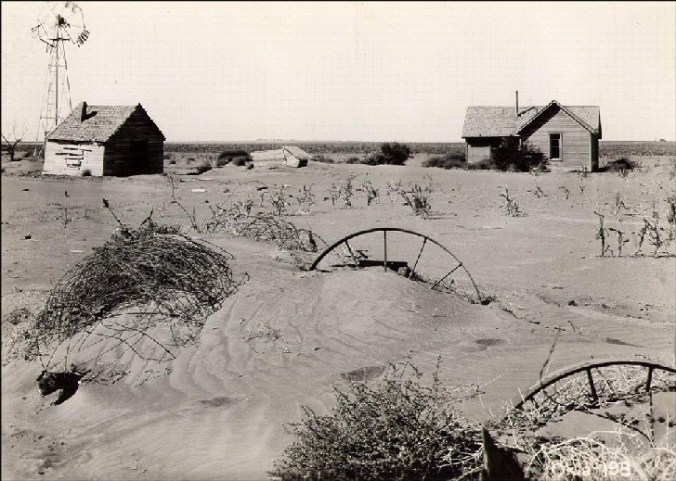
The Great American Dust Bowl

Dust-Bowl-Public-Domain.jpg

In Virginia we don’t think about wind erosion as being a significant problem. It is much more common in dryer climates where there is less moisture holding soil particles together, and  the wind is stronger and more persistent. In the US, those conditions are most widespread in the Great Plains region from Texas to the Dakotas. It was in this region that the phenomenon we call the “Dust Bowl” occurred from 1930 to 1939. This event has been called by some the greatest environmental disaster in modern history. It was so disastrous that it brought people in high places to the realization that our nation was on the verge of soil bankruptcy. According to one estimate, enough soil was moved during this period to fill the Grand Canyon! Soil scientists had been aware that back in the East, equally damaging but much less dramatic, soil erosion had been going on for over 300 years. In both scenarios farmland had been abandoned because families couldn’t survive economically on it. It took the Dust Bowl to raise the alarm loud enough to give impetus to change. The Soil Conservation Service was formed, and it addressed soil conservation needs all across the US.

The conditions leading up to the Dust Bowl took a lot of years to converge into one dramatic event. In 1862 the Homestead Act was passed by the US Congress. Earlier attempts had failed in fear of slaveholders taking huge tracts of land. Any citizen could claim 160 acres to farm by paying a small filing fee, making a few minimal improvements, and living on the land for 5 years. In 1873 an additional 160 acres could be applied for if 40 acres were planted in trees. The best land was taken first, usually lower-lying land along streams and rivers. In 1904 the homestead acreage was raised to 640 acres on some of the less desirable land west of the 100th meridian. In 1916 a stock-raising provision also allowed an additional 640 acres.

All of this encouraged a great influx of settlers into the region. The new landowners farmed the way they knew how. Tillage was used for both seedbed preparation and weed control. Soil conservation was unheard of. Crop yields were good, even by today’s standards, when there was adequate rainfall. Tillage of virgin lands, though destructive to soil organic matter, made nutrients available to crops. The 10 years prior to the Dust Bowl era were ironically above average in rainfall, thus encouraging an increasing number of tilled acres. When the drought of the 1930s came, the number of acres of exposed soil was at its peak.

The prolonged drought brought along with it devastating wind storms. The Dust Bowl’s footprint was 100,000,000 acres. The Yearbook of Agriculture 1934 (Remember this event lasted until 1939) reported that 35 million acres had already been destroyed for crop and livestock production. Another 100 million acres had lost all their topsoil, and 125 million additional acres were losing topsoil at a rapid rate. There were several notable storms that were especially devastating. One occurred on May 9&10, 1934. It was 1500 miles long and 900 miles wide. It transported an estimated 650 million tons of topsoil. The city of Chicago received 12 million pounds of soil in that single event. April 14, 1935, was known as Black Sunday. Dust was visible on the eastern seaboard as much as 2000 miles from the source. Visibility at ground zero was as low as 5 feet. Over 300 million tons of soil were transported in this event. Needless to say, the effect on man and beast in the Dust Bowl region was horrific. People suffered many health problems and were ruined financially. Many animals died. Those surviving suffered respiratory problems as well as poor nutrition due to the decline in feed production. Many families had to exit from the region. Three million people joined the ranks of the already burdensome unemployed population. The Great Depression, unfortunately, occurred  simultaneously with the Dust Bowl. Creditors foreclosed on nearly a million farms in the Dust Bowl region.The most productive soil was gone. Nutrients and organic matter that had accumulated in the upper layer of topsoil for thousands of years were gone. North Dakota alone lost an estimated 16 billion tons of topsoil. The remaining soil was much lower in organic matter and nutrients than the soil that had been lost.

   The Dust Bowl era was not the most severe drought on record  for the affected region. There was a more prolonged drought in the latter 1800’s. The real killer in the Dust Bowl was the huge acreage of exposed soil when compared to other droughts. There was a prolonged drought in the same region in the 1950’s, but due to less exposed soil, there was only a fraction of the devastation of the Dust Bowl era. If there was a ”silver lining”in this catastrophic event, it was that it brought America to the realization that we were precariously close to food insecurity. We could not continue ignoring the depletion of our soil resources.

 In 1933 Congress formed the Soil Erosion Service and Hugh Bennet, an ardent proponent of soil conservation, was appointed its Chief. This new agency set about to bring public awareness of the need to protect soils and began setting up demonstration projects. This effort was upstaged by the huge dust storms of 1935. The literal dust cloud over Washington D.C. brought about a heightened sense of urgency in Congress. Hugh Bennet was just finishing an address to Congress on the urgency of the situation when the sky outside the capitol building became dark from a western dust storm! The Soil Conservation Service was formed with much broader focus and resources than its predecessor. Hugh Bennet was again placed in charge, and he was a dynamic leader in the conservation effort. The SCS was national in scope and dealt with both wind and water erosion. It focused on best management practices to combat erosion and hired and trained technicians to manage programs and educate landowners on a local basis. The SCS has more recently morphed into the NRCS but it still focuses on maintaining or improving soil and water quality.  Go to the NRCS website for information  about its history and programs. The mega dust storms and the rampant soil erosion of earlier times are no longer a threat to our food security, largely due to the effectiveness of these programs. Soil loss is still not as low as it should be in many areas and under some cropping systems, but sustainable soil management is achievable in modern American agriculture.

New Life

cow

All around us new life is bursting out! Grass is growing, providing a verdant carpet for fields that have just recently been dormant from the effects of frost and cold. Daffodils, crocuses, and other perennials add their glory to the season. Maple trees are taking on a reddish hue as their buds swell. (I am writing this in early March.) Some flowering trees are already blooming. By the end of March, leaves will begin pushing from the swollen buds. The quiet nights have given way to a chorus of frogs who take the stage when the birdsongs fade out at evening. Soon both the frogs and birds will be laying eggs that will bring forth a new generation of their species, as they have ever since creation. Soon the soil will be warm enough to sprout seeds, and new plants will emerge to face whatever challenges that may confront them as they glorify their Creator!


We, in the Northern Hemisphere, are blessed that springtime occurs at Easter time. I can’t imagine having Easter in the fall. All the excitement of springtime helps to give meaning and credibility to the resurrection of Christ, and the possibility our own eventual resurrection as well. In John 12:24, Jesus was referring to His pending death and resurrection when He said, “…unless a grain of wheat falls into the ground, and dies it remains alone; but if it dies, it produces much grain.” In the next verse, He ties this analogy to the believer who becomes dead to the world but becomes alive for eternal life. Paul gives a similar illustration in 1 Cor. 15:36, “what you sow is not made alive unless it dies.”


We don’t know if Paul had heard of Jesus’ statement, but they were both very accurate in the choice of seed used in their analogies. They both used a grain of wheat. Not just any seed would have fit the illustration. It had to be from those species classified as monocotyledonous or as having a single seed leaf. Most grasses, including the cereal grains, fall into this category. When a monocot is dropped into the ground, it has the potential to sprout if it is viable. Sprouting will only occur if both moisture and temperature are favorable. Moisture will penetrate the pericarp (outer seed coating) and be absorbed by the endosperm (the starchy portion), causing it to swell and become available to the tiny epicotyl (germ or living part). The epicotyl draws nutrients from the endosperm as it extends a root downward into the soil and pushes the growing leaf upward toward the soil surface and sunlight. If you plant a grain upside down or sideways, no problem, the root will loop downward and the leaf upward. By the time we see a green leaf above the soil surface, there is also a functioning root underground. The green leaf is capable of processing nutrients and moisture from the roots, and provides the nutrition for the growing plant through photosynthesis. The young plant is now on its own. The old seed has spent all its nutrients, is now dead, and will decay.


Dicotyledons don’t fit this illustration very well. We’ll take a bean for example. The bean seed has two halves (cotyledons). When soil moisture and temperature are favorable, germination can begin. The seeds swells and bursts the pericarp. A root begins to extend down, but the whole seed is pushed up out of the ground! Although the epicotyl has drawn nutrition from the cotyledons, they are not totally consumed. They turn green in the presence of sunlight, and actually become the first two leaves. This doesn’t make dicots less holy than monocots, it just makes them not suitable for Jesus’ lesson. Obviously Jesus was aware of all this when He chose which seed to use in His explanation of death and resurrection.


As we enjoy this spring season, let’s reflect much about the new life that is all around us. As we contemplate Easter, let’s visualize Jesus’ death and burial, realizing that it was necessary in order for Him to be resurrected and bear incredible eternal fruit! By His resurrection, a new era in the relationship between God and man was instituted. We are dead to sin but alive with new life in Christ (Romans 6: 1-13). We are dead to the law and alive with new life in the Spirit (Romans 7:1-6).


New life, fresh unblemished new leaves, exuberant birds and frogs; each is glorifying the Creator! How can we adequately glorify God for the new life that He has made possible for us through Jesus’ death and His triumphant resurrection?

Healing The Land

IMG_5441

Soil is basic to our existence. Productive soils provide a foundation on which all other human enterprises can be built. In societies where soils are unproductive and resources are limited, most of the effort of the population is directed toward subsistence farming. If agricultural productivity can be increased, somebody can sell something. Then somebody has money to buy something. Somebody has the time to make something to sell. A society’s productivity is dependent on the productivity of its farms. There are some exceptions among wealthier nations now, but they didn’t start out that way. Most of the poorer nations of the world are trying to feed themselves from soils that have been abused for hundreds, even thousands, of years. Any real progress in agricultural production must begin with healing the land.

All of this may seem remote to us here in America, but it is worth our time to look at where we have been and where we are today with respect to soil. When Europeans first came to America , the native population was so sparse that it had virtually no impact on the soil. The white settlers were presented with soils that had been building for many hundreds of years, even thousands. Much of the land they farmed was forested. They cut down trees,grubbed out the stumps that they could break loose, and farmed around the stumps that wouldn’t budge.

The available acreage was limitless! When land became less productive they simply moved on. ( We are critical of slash and burn agriculture in the Third World. Was this any different?) Settlers continued west. The forested lands west of the mountains were settled next, then the prairies, then the Great Plains, then on to the west coast. Not all of this pattern was due to depleted soils. The population was expanding also.

A couple years ago our family spent a week in Eastern Va. One day we decided to visit Yorktown, the site of the final battle of the Revolutionary war. A guide gave us a brief history of the city. Yorktown is situated near the mouth of the York river. It is an ideal natural harbor. The water is deep right up to the riverbanks. Docks were easily built. Tobacco was introduced shortly after Jamestown was settled, and very soon dominated colonial agriculture. When Cornwallis hunkered down in Yorktown, Washington”s army bombarded the town until the British army surrendered. Half of the buildings in the city were destroyed by the shelling. Here is the punchline. The city was not rebuilt! By the late 1700’s all the soils within a large radius of the city had been depleted to the point where it was no longer practical to market tobacco in Yorktown. Freshly cleared virgin soil in Eastern Virginia could yield 3 consecutive crops until it had to lie fallow. After that, subsequent crops yielded less and the land was abandoned. Tobacco culture had moved further inland. Then the land mercifully had its sabbaths. Now the area has a mixture of productive farmland and tall timber. Two hundred fifty years of healing seems to have erased one hundred fifty years of abuse. Those fragile soils probably are still a long way from what they were in 1600.

I was visiting with a retired dairy farmer from Powhatan County several years ago. He had bought his farm there around 1960. Powhatan is just west of Richmond. Soon after he bought the farm, he contacted a soil conservationist to help him plan his cropping program. The soils man said,”Your topsoil is gone. Your subsoil is gone. You’re trying to farm the third layer.” I’m sure there were some struggles early on, but good stewardship of the soil helped that farmer to be successful. When I travel through Powhatan county today, I see good timber and productive farmland, but it has not always been so.

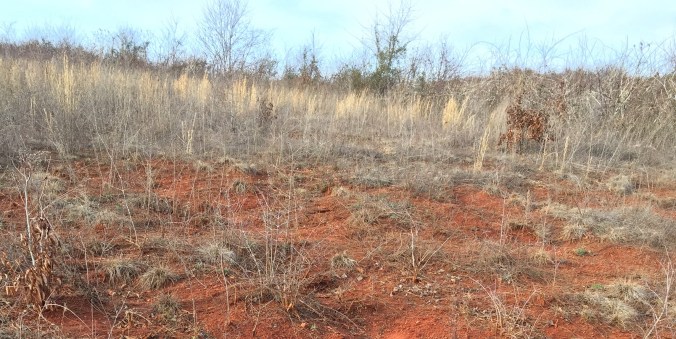
On our own farm I have seen the scars of earlier abuse. We have cleared over a hundred acres since I began my farming career. We knew that we weren’t here first. There were old tobacco rows between the trees. There were gullies healing up in the woods. A typical soil test on our “new ground” was ph 5.0 or less, phosphorus very low, and potassium very low. Crop yields were low. It  took several years of manure, lime, and fertilizer to improve the soil to the point where yields were adequate. How much better would it have been if good soil stewardship had been practiced all along.

All of this is 20-20 hindsight of course. We can’t recover the soil or the fertility that has been lost. We can’t really blame past generations. They were acting in good faith with the knowledge and resources available to them. We have the tools and knowledge today to build soil and enjoy good yields in the process. It is interesting to note that a farmer less than an hour west of Yorktown (on the James River) set a new world record in corn production last year (2017) . The new record is 542 bushels per acre. He is a proponent of “never-till”. His crops are all established by no-till planting. Crop residue is left on the surface rather than being plowed down or disked in. The soil is protected from erosion and soil fertility, organic matter content, and water infiltration, are all improved.

Now, how does this relate to agricultural development in missions? Having experienced soil healing in the US, we have  some perspective as to what is possible in areas where soils have been similarly depleted. Farmers in developing countries haven’t had access to the information or the resources that are available here, but similar healing of the land is possible. Almost every developing nation has already had analysis,research,and extension education to help meet the needs of the small landholders. This sounds contradictory, but somehow the message has not rooted well. There are many cultural, economic, political, and spiritual barriers that have undermined progress in agricultural development.The goal of “holistic development” is to combine spiritual outreach with those everyday challenges that indigenous peoples face. Development workers who are spiritual leaders first, can establish trust with indigenous people, and can help them accept changes to boost their productivity and quality of life. I may have aroused some interest, raised some questions, and left some things hanging— topics that will be discussed at a later time.


Remembering Bethlehem or The New Beginning

SnowChapel

In the beginning, or soon after, God desired to create man for His honor, and glory, and praise. He had already transformed an utterly uninhabitable planet into a paradise fit for the occupation of the crowning glory of His creation—man! God created man in His own image. Does that mean a physical likeness? Maybe. I think it probably has to do more with intellectual and emotional likeness. God created man to honor Him and communicate with Him on a spiritual, emotional, and intellectual level that none of the other creatures could experience. He wanted humans to have relationships with Himself, not just a pre-programmed service to Him. We were to be in relationship with Him by our choice. That power of choice also brings with it the risk of failure. Satan had already been cast out of God’s presence, and God knew that he would do his utmost to tear down God’s kingdom.

The first human couple experienced a direct relationship with God as He communicated with them in the Garden of Eden. Right on cue, the devil stepped in and robbed them of their purity before God with his temptation. Alas, the first couple were the first to sin, and they along with all of creation suffered the consequences.Adam and Eve were driven out of their perfect environment. Adam had to battle weeds,disease, and pestilence in his quest for food. Mankind was sentenced to aging, disease,pain,and death. Women would experience pain in childbirth. Adam and Eve’s first-born son would become the first murderer.This brought about the first reset. God made provision for redemption through the shedding of blood. We don’t have much written about animal sacrifices until later, but we do know that God honored Abel’s sacrifice of a lamb. The next period in history produced some remarkable people who lived long and productive lives. Enoch’s relationship with God was such that God spared him from death and transported him directly into His eternal presence. Mankind’s spiritual trajectory was downhill until we get to Noah. God was angered at mankind’s utter disobedience, and resolved to start over again with Noah. He destroyed all but Noah’s family with the flood.There was again a rapid expansion of the human population. Can you imagine God’s pain when the vast majority of people forgot Him or ignored their responsibility to Him? He dispersed them when they started on their ambitious project to build the tower of Babel.

The next reset came with Abram. God saw that Abram ( now Abraham) would teach his descendants to serve God, and He made an everlasting covenant with him. Included in this covenant was the promise that through Abraham’s seed all the nations of the earth would be blessed. This was a prophesy of salvation for all mankind through Christ. God’s story continues through Isaac, Jacob,Joseph and his eleven brothers. It goes through the Israelites’ time in Egypt and their release from the bondage of Egypt. God led them miraculously through the Red sea, 40 years of wandering in the wilderness, and a miraculous crossing of the flooded Jordan River. During Moses’ time of leadership, God established His written record of His story and His instructions for holy living. Moses’ record included instructions for worship and sacrifices for sin.

Joshua became the leader after Moses died, and led the Israelites during the conquest of the promised land. The era of the judges was marked with highs and lows in the spiritual life of “God’s chosen people”, maybe more lows than highs. Samuel was the last of the judges, but despite his strong leadership, the people clamored for a king like the nations around them. God comforted Samuel,”They have not rejected you, they have rejected Me.”

Now we have come to the part of the story where Israelite history overlaps the history of Bethlehem. Bethlehem is first mentioned in Genesis. Jacob buried his beloved wife Rachel in Bethlehem. It seems they were merely passing through when she died, and we don’t have any record that any of the patriarchs ever spent much time there. Bethlehem was only 5 or 6 miles south of Jerusalem and now their suburbs overlap except for a dividing wall. So when Abraham gave tithes to Melchizedek, King of Salem ( Jerusalem ), he was nearby. It is likely that Bethlehem was established by Canaanites before Abraham’s time. Bethlehem was “house of meat” to Canaanites and “house of bread” to Israelites. Regardless, Bethlehem has been a roadside seat for very much history, a part of the world where empires have often marched back and forth. During the time of the judges, much of the land was contested, because the Israelites had been unfaithful to God and the Canaanites hadn’t been completely driven out. The book of Ruth  brings more focus on Bethlehem. Naomi and Ruth return as widows to Naomi’s ancestral home in Bethlehem. Ruth and Boaz were married and their great grandson was David. Of course, David was Israel’s second king and was the first in the royal lineage that culminated in the birth of Jesus. Jerusalem became capitol of Judea, and Bethlehem was just another village beside the road to Jerusalem. By its close proximity to Jerusalem, Bethlehem no doubt felt alternately pain or well-being as Judah experienced good kings and bad kings for 450 years.

Once again faithfulness ( and worship) to God reached a low ebb. God brought judgement on His people by allowing them to be conquered and carried into captivity by the Babylonians. In addition to their immorality, God was disappointed in their treatment of the poor, and their abuse of the land. After 70 years God brought a remnant back to Judea to rebuild. They rebuilt the cities, including Jerusalem and the temple, which had been destroyed. There was a time of spiritual revival which began under Zechariah, and the Jews never again fell back into the old Canaanite idolatry. Nevertheless, spiritual fervor gradually declined until there were no prophetic utterances for the last 400 years leading up to the birth of Christ. The silent years were not without struggle. There were struggles back and forth for control over the territory. There was influence from Alexander’s empire and later the Romans. There was the Maccabean era with a lot of bloodshed.

So the Bethlehem of Judea that Joseph and Mary found 2000 years ago, may have been a quiet bucolic town in rural Judea, but it was only momentarily resting from a tumultuous past. It was about to experience the pinnacle of its existence, and it would go on to see more unrest in its future. Micah’s prophesy was being fulfilled. Jesus was Born in Bethlehem! The angels announced His coming to the Shepherds abiding in the fields, and they came to worship Him. The wise men followed a star to Bethlehem, and they also worshipped Him. Sadly another prophesy also came to fulfillment. Jeremiah spoke of Rachel weeping for her children who had been killed. This was fulfilled when Herod ordered all the male children in Bethlehem under two years of age to be killed, in an effort to kill the child who might overthrow him.

Jesus’ growing up years were mostly in Nazareth, where His parents had lived. We don’t have record of Jesus visiting Bethlehem after that very early time in His earthly life. During His ministry years, He may well have visited His birth city, because much of His ministry occurred in the Judaen countryside. Bethlehem would have known of His teachings, His miracles, and of His death and resurrection.

God was making a monumental change in His outreach to all mankind. Instead of a religion based on laws and sacrifices, He provided one sacrifice that would be sufficient for all people for all time! Jeremiah prophesied ( Jer. 31:31-35) that God would establish a new covenant with His people. He describes a different relationship with believers than with the old covenant. No longer would there be priests as intermediaries or animal sacrifices for sin. It would be possible to have direct access to God. Jesus’ ultimate sacrifice on the cross supplanted the substitutionary animal sacrifices of the old covenant. Jesus introduced the role of the indwelling Holy Spirit in the daily life of the believer. The book of Acts records how the Gospel was found to be inclusive of gentiles as well as Jews. Revelation describes a innumerable host of believers worshipping around God’s throne, from every tribe, nation, and tongue. Revelation 21:1-4 describes God’s plan for His people for eternity. “ And I saw a new heaven and a new earth: for the first heaven and the first earth passed away; and there was no more sea. And I John saw the holy city, new Jerusalem, coming down from God out of heaven, prepared as a bride adorned for her husband. And I heard a great voice out of heaven saying,” Behold, the tabernacle of God is with men, and He will dwell with them, and be their God. And God will wipe away all tears from their eyes; and there will be no more death, neither sorrow, nor crying, neither shall there be any more pain; for the former things are passed away.”

There are many chapters of history between Jesus’ birth and the scenes described in Revelation, and some still need to be written. God’s kingdom building seems to have been slow at times, and sometimes almost snuffed out. History is more a story of God’s faithfulness and His drawing mankind to Himself, than it is of man’s accomplishments. Bethlehem, Jerusalem, and all Judea declined in relevance after Jerusalem was destroyed in 70AD. The early Christian church was scattered.  The Christian movement left Judea,the historic “land of promise”. Jesus predicted in Luke that Jerusalem would be trodden underfoot by the Gentiles until the time of the Gentiles would be fulfilled. Will that be soon? The nation of Israel was re-established after WW II. President Trump just recognized Jerusalem as the capitol of Israel. What is the significance of these events? Bethlehem has also survived the centuries, whatever happens to Jerusalem will be seen and felt there as well! O little town of Bethlehem, you will again see the Redeemer in all His glory!

White Unto Harvest

pexels-photo-96769

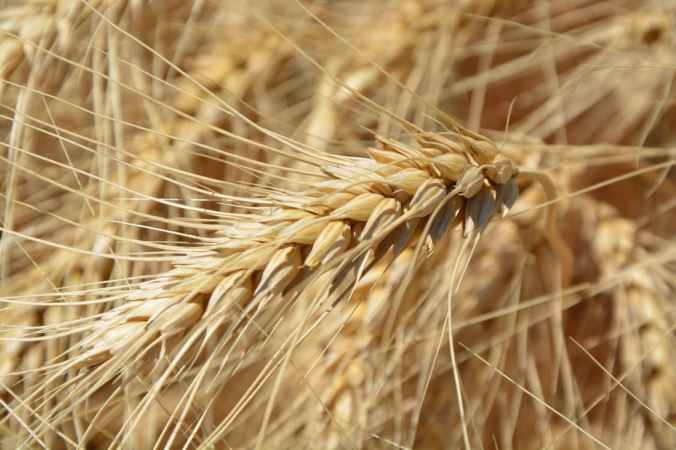
Have you ever thought about Jesus’ statement about the fields being “white unto harvest?” Why not golden or brown? My first impression of Ethiopia as we were leaving the capitol was that as far as the eye could see the fields were white unto harvest. White, in this case, is a relative term. Of course they weren’t snow white. When wheat, barley, and yes, teff mature they begin to translocate nutrients from the leaves and stems into the seeds (their fruit).When this process is complete the plant is dead and it has a bleached appearance — “white”. As it dries further it will turn golden from the sunshine. Further ripening, drying, and weathering will turn it brown then gray or worse.
When we visited the remote village we realized we were interfering with the harvest by inviting people out of the fields for services. Not a big deal I thought. The rainy season is over and the chance of significant weather damage is over. It’s too dry for green weeds to interfere with harvest.  What’s the rush? It didn’t dawn on me until we got home why there was so much urgency. We harvest with combines and we wait until the wheat dries to at least golden in color. Brown is even OK. In the world of combine harvesters, we want the grain (cereal grains) to be dry enough to store when we harvest. If we can get the grain into the header without shattering, it is captive unless something is out of adjustment and we lose some out the back. Hot dry weather is our friend for a speedy harvest.

Hand harvesting in Ethiopia is obviously much different. First, the wheat is cut one armful at a time. A sheaf is formed by twisting a handful of stalks around the bundle to hold it together. Sheaves are stacked together in shocks or piles until they are ready to be moved to the threshing floor. The sheaves endure a donkey ride and then are stacked around the threshing floor. The biggest loss in harvesting is the seed shattering to the ground when the crop is completely dry. How can this be avoided? Start harvesting when the grain is white! All the nutrients are already in the seed, it just needs to be a little drier for storage. At the white stage wheat can be cut with a sickle and bundled into sheaves without shattering. The wheat will continue to dry as it stands in shocks and when it is piled by the threshing floor. If it is fully dry when threshing begins, grain will be separated from the rest of the plant by flail or trampling by oxen. You know the rest — the straw is forked away, and the grain is winnowed (or cleaned) by tossing it up and allowing the wind to drive the chaff away. If harvest had been delayed until the grain was fully dry in the field, major losses would have occurred. Dry grain could have shattered as the sickle cut through the stalks. More could have been lost when tying the sheaves. Piling, transporting, and re-piling could also cause losses. Note — teff is extremely brittle and shatter-prone when completely dry.
OK, what is the spiritual application here? When we were in Ethiopia we saw throngs of people in the capitol before we saw the crops in the field, so it was very easy to make the connection to a spiritual harvest. But “white” — how does that apply? The harvest must be in progress now!! It is more urgent than we thought!  If we delay, there will be losses. Souls that were reachable may have fallen out of sight or out of reach. Small windows of opportunity may be closing. We may be near the end of the age (“night is coming when no man can work”).
As we were leaving Addis I told Leul “behold, the fields are white unto harvest.” He answered, “Pray that the Lord will send workers to His harvest.”

God Will Not Lose This Election!

img_3940

This year’s presidential election is seen by many as a watershed event for America. In the last eight years we have seen the Left grow in power and influence at all levels of government. We have experienced unprecedented ridicule of Christian core beliefs from the press, politicians, and celebrities. Many people see the presidential election as pivotal in structuring the Supreme Court for the next generation. The outcome of this election could determine the regulatory burden and taxation that we will endure from here forward. Our economy has been stagnant at best in recent years. Are we headed for an extended decline from the level of wealth we enjoy today? Can we count on the next generation being better off financially than the previous one? If we are honest, we are probably most worried about our loss of prosperity and comfortable lifestyle. Somehow we expect one candidate or the other to be able to heal the wounds of our society. Political promises have a long history of being unfulfilled! Most of America’s problems stem from deeper rooted spiritual problems. Unaccountability, unfaithfulness, greed, jealousy, immorality, and more, rot the fabric that should be holding our society together. To expect political solutions to be more than band-aids is like seeing a mirage. As Christians, though we may have civic responsibilities, we must be part of the spiritual solution! Changed hearts and lives bless a nation in two ways. First, the disfunction that is so damaging to our society is lessened. Secondly, God will bless the nation that honors him.

Let’s look at Israel in the Old Testament. God brought the Israelites into a fruitful land. They were instructed to posses it and root out all traces of the false religions that permeated the land. They were also warned that, if they were unfaithful, He would bring them to repentance with drought, adversity, and subjection to other nations. They had a roller-coaster spiritual existence for the next nearly 800 years. Sometimes a judge or a good king would rally them to rekindle their relationship to God. Many times God chastened them through suffering. The nation divided after Solomon’s reign. The northern kingdom, Israel, declined faster spiritually than the southern kingdom, probably because they cut off all ties to Jerusalem and the temple. Israel went into captivity over 120 years before Judah and never recovered as a nation. At that time, prophets were already prophesying the downfall of Judah. Hezekiah and Josiah were two exemplary kings during Judah’s last 120 years. But sandwiched in between was Manasseh, “who caused Israel to sin”. He was the worst king spiritually in Israelite history. I have often wondered why God allowed him to reign 55 years (the longest of any king). I have concluded that God gave the people what they wanted as He did when Saul was crowned. Interestingly, Manasseh repented near the end of his life,but the evil that had occurred in the land was not undone. A revival under Josiah delayed God’s judgment for another 55 years. During this whole period of history there must have been a steady spiritual decline. Judah was conquered by the Babylonians in 689 BC. A remnant of Jews returned to their land 70 years later, as prophesied, and re-established the nation of Israel which lasted into the first century AD, when it was decimated again. The Jewish nation has again been restored to its homeland in preparation for the next event in God’s master plan. God has preserved a remnant of Abraham all throughout history to bring the Messiah and now to prepare for His second coming. God used ungodly nations to chasten the Israelites, but he brought them to judgement also.

How does all of this relate to us? First, we need to realize that the rise and fall of nations is all a part of God’s larger plan. We are familiar with several nations in recent history that aspired to become empires, but they were defeated. God used the U.S. and its allies to topple those evil regimes who were blatantly anti-christian and persecuted believers. In the nineteenth century there were global mission organizations founded in Europe. During the twentieth century, the United States became the predominate resource nation for missions. Historically America has promoted individual liberty, guaranteed freedom of worship and openly encouraged Christianity. America has been instrumental in protecting the nation of Israel. Is all of this enough to earn “most favored nation status” with God? Shall we congratulate ourselves for what America has done for God? We should rather feel privileged to have been used by God to accomplish His purposes.

Let’s look at the darker side of America. We are seeing moral decline. We have nearly a million abortions per year. Family life is on a downward spiral. Single parent homes result from the very high divorce rate and from children born out of wedlock. All kinds of immorality abound without shame. Christian values are openly ridiculed.

I don’t know what God has planned for America. Will we see another surge in our lifestyle and economy? As Christians we should be most active in God’s kingdom work. We should be establishing relationships one at a time to grow His church. The most beneficial “change” we could have in America would be a tremendous outpouring of the Holy Spirit resulting in a great turning toward God. We are nearer the end of this age than we have ever been before. The wealth and comfort we have experienced as a nation are unique in history. These things may be fleeting, so we must hold them somewhat loosely. We must hold fast to our faith in Christ which is good for eternity. Are we more worried about the economy than we are for lost souls around us? Can we build relationships, and so build spiritual prosperity with eternal value?

Who will win the election? It is under God’s control. He could allow Trump to suffer a gaffe that he is unable to recover from. He could bring an unsurmountable scandal to light that would ruin Hillary’s chances of winning. I am reminded of the 2012 election. Romney looked like the winner two weeks before the election. Hurricane Sandy struck the East Coast. Romney respectfully toned down his rhetoric for a week. President Obama viewed the hurricane damage, got a lot of favorable press, appeared compassionate and presidential, and he won the election. I have often wondered if Obama could have won without Sandy. God will determine the outcome of this election according to His grand master plan. That doesn’t mean that He will endorse or give His blessing to the winner. He may give us what we ask for even if it is not the best for us. Ultimately, it is how America responds to God that determines how long we experience His favor. Political solutions, military strength, economic adjustments, border vigilance, are all in vain if God is left out of the process. Psalm 127:1 says, “Unless the Lord builds the house, they labor in vain who build it; Unless the Lord guards the city, the watchman stays awake in vain.”

Miracle on Long Island Road

img_3681

I have been doing some part-time welding on trucks at my brother-in law’s shop at the old Frank’s Place building near Long Island, VA. Such was the case on August 18, 2016 at about 3:00 PM. It was the day before my birthday, which I share with Paul, Janna, and Bill! I was just beginning to weld several crosspieces that had cracked loose on the under side of a box truck body near the front. The body was sitting loose on the frame of the truck and was not fully forward in its normal position. The truck that I was working on was in a paved parking lot between the shop and Long Island Road. The building is about fifty feet from the highway and parallel to it. The truck was parked at an angle between the building and the road. The right front corner was only a couple feet from the building, and the left rear corner of the box was less than twenty feet from the road. Just ahead of my truck, a tandem road tractor was parked, its back end near the shop and facing the road, perpendicular to both.

I was working under the left front corner of the box with my back turned toward the road. My field of vision was pavement, truck frame, and a truck axle with wheels. Squalling tires suddenly interrupted my concentration. As I glanced over my right shoulder, a car darted past. Right behind it came a jack-knifing red road tractor with an empty flat-bed trailer. It was fully jack-knifed as it left the highway and angled toward the shop. No human being had any control after that point. I only had time for two very brief thoughts. First, I was relieved to see that the rig would clear the corner of the box by a few feet. Secondly, I figured that the rig would hit the parked road tractor broadside and then everything would stop. I instinctively hunkered down for the final impact. As it came to rest, the front left corner of the Ford caught the left rear corner of the cab of the box truck and moved it a foot or so. The parked road tractor absorbed most of the impact.

Now that everything had stopped moving, I crawled out to see how the truck driver was doing. He too was unscathed. He was able to open his driver’s door and step across the back of the other road tractor. The driver of the car, who had pulled out in front of him, was next on the scene. He likewise was relieved that no one was hurt. My first contemplative thought was that I had miraculously escaped death or serious injury. The next thing that popped into my mind was the line from Robert Frost,”I have promises to keep and miles to go before I sleep.”

Throughout the few seconds that it took for all of this to happen,God gave me an incredible sense of calmness. My eyes hadn’t followed the final second of the wreck, so I don’t have a picture imprinted in my brain of the rig’s final trajectory, which was much closer to me than I had expected.The nearest corner of the jack-knifed truck came within a foot or two of me as it slid past. The welder, which had been beside me, got smacked under the front part of the box truck. The front tire skid-marks of the Ford crossed a few feet after it left the highway,indicating that the left front tire was leading its mate for the rest of the slide. After all this analysis, God still gave me peace. Why be shaken by what could have been when God has already effected the best possible outcome?

Sunday was the third day after the accident. Our family was on vacationing on Hilton Head Island, SC. I thought about where I might have been that day. I could have been lying in a hospital ICU with an anxious family around me. My body could have been in a casket at a funeral. (“To be absent from the body is to be present with the Lord”) But I wasn’t in either of those scenarios. I have promises to keep and miles to go before I sleep.

All of us are alike in this, although not so dramatically reminded. We have promises to keep, and God has given us time to be faithful in keeping them. We have (or should have) made promises to God in response to His promises to us. We have promises in relationships——spouses,children, parents, others. We don’t know how many miles we have left, but we are aware of the promises we have to keep. May we resolve to be faithful in keeping them!